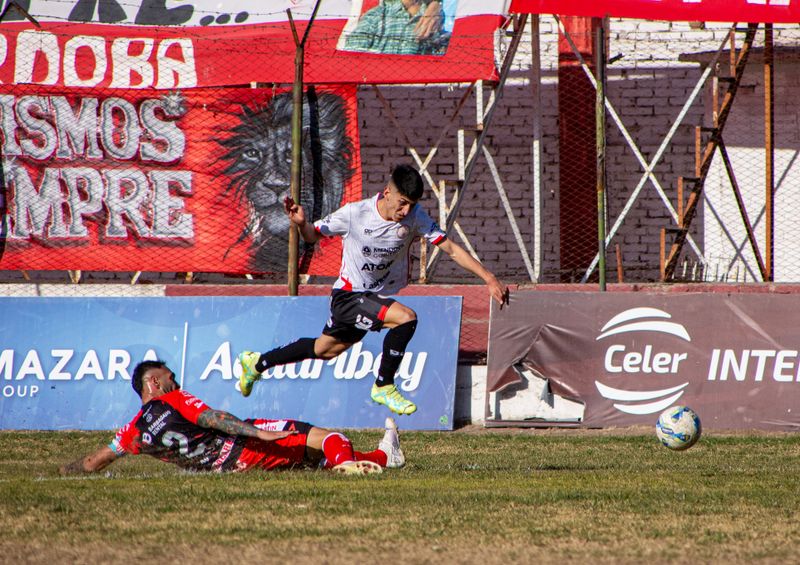
Replays at a quarter speed distort intent, and officials and viewers are both being asked to judge contact in a format that misrepresents it.
Slow motion makes every challenge look like a crime

Run any tackle at twenty-five per cent speed and it becomes appalling. The studs stay in view for a long time. The contact holds. The defender's face has time to arrange itself into something that looks like malice. Play the same thing at full speed and it is often a player arriving a fraction late and pulling out.
This is not a small production quirk. It shapes how decisions get made and how they get argued about afterwards.
The relevant thing is that human judgement of intent is calibrated to real-world speed. We read whether someone meant it from the timing of a decision, and slow motion destroys exactly that information while preserving and amplifying everything about the impact. Which is why the same clip can support two completely opposite conclusions depending on the frame rate somebody watched it at.
There are refereeing bodies that have taken this seriously and instruct officials at a monitor to watch an incident at full speed first, and to use slow motion mainly for point of contact rather than for force or intent. That is the right approach, and it is not applied consistently, and it is almost never applied on the broadcast, where the replay operator's instinct is to go slower and slower because it looks dramatic.
Handball is the purest example. At full speed, a defender turning away with an arm moving naturally to balance is obviously not deliberate. At one-eighth speed, with the frame paused at the moment of contact, the arm looks like a decision. Nobody moves like that in a game. The still image is a fiction produced by stopping time.
I would put a rule on the broadcast side of it. Show every contested incident at full speed twice before showing it slowly, and put the frame rate on screen so viewers know what they are looking at. Not because it would settle arguments, but because it would put everybody in the same argument.
Cricket has the same trap with the front-foot no-ball, where a still frame makes almost every delivery look marginal, and the answer there was to measure it rather than to squint at it. That option does not exist for a challenge in midfield. Judgement is unavoidable, so at least judge it at the speed it happened.
ADVERTISEMENT
🧠 Quick Trivia
How many points is a touchdown worth in American football before the extra point?
Related Articles