Every side now presses the back four; almost none of them have a plan for the one player who is allowed to use his hands.
Goalkeepers are the most underused way to break a press
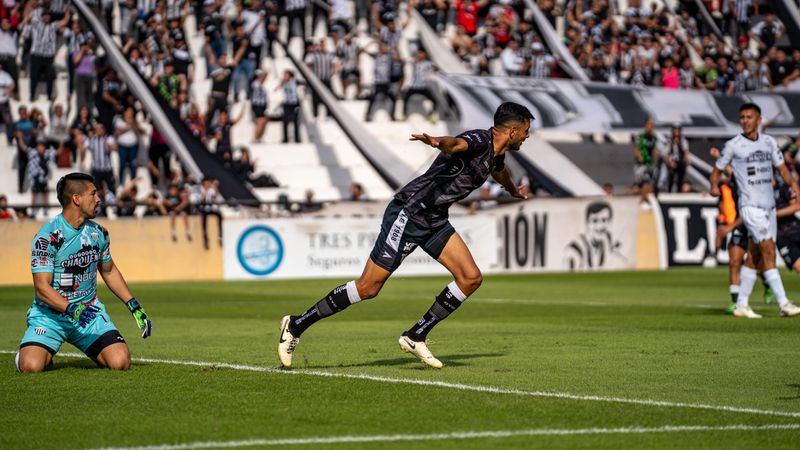
Here is a situation that occurs several times in every match and gets solved badly almost every time. The ball goes back to the goalkeeper. Two forwards close him down at an angle, cutting off both centre-halves. He has about two seconds.
What usually happens is a panicked long kick, straight down the middle, straight to a centre-half, possession gone.
What should happen is that he picks it up. Not literally, obviously, not from a back pass. But the moment the ball is in his gloves from a cross or a save, the entire pressing structure of the opposition becomes irrelevant, because he can throw it. A flat overarm throw to a full-back forty yards away, delivered before the press has reset, bypasses everything and starts a counter with the ball on the ground and controllable. Handball goalkeepers used to do this instinctively. Now, trained to be an eleventh outfielder, plenty of them roll it to a centre-back six yards away and hand the initiative straight back.
The other underused option is the deliberate diagonal to a wide forward. Not a hopeful punt to a striker in a crowd, which is a fifty-fifty at best and usually much worse. A driven ball to the opposite flank where a winger is one against one with a full-back who has pushed high. That is not a long-ball tactic. It is a switch of play that happens to start from the goalkeeper, and it works particularly well against sides that press with their full-backs stepping up.
Against a press, the value of a goalkeeper is not measured by pass completion. It is measured by whether the opposition can predict him. A keeper who always plays short is as readable as one who always goes long, and readable is the only thing that really gets punished.
The part that frustrates me is the coaching. We spend enormous time on the first phase, the shapes, the numbers around the box, the movements to create the free man. Then the free man turns out to be the goalkeeper, who has practised twelve-yard passes all week and has not hit a driven sixty-yard ball since Tuesday.
And there is the six-second rule sitting there, barely enforced, which quietly makes all of this a bit theoretical. Referees hardly ever call it, which is why keepers can take an eternity and why a genuinely quick release is now a competitive edge rather than a requirement. Anyone willing to use that edge properly gets a free attack two or three times a game.
ADVERTISEMENT
🧠 Quick Trivia
How many points is a touchdown worth in American football before the extra point?
Related Articles