Every side on earth is compact now. The number that separates them is the one nobody puts on screen.
Measure how high a block sits, not how narrow it is
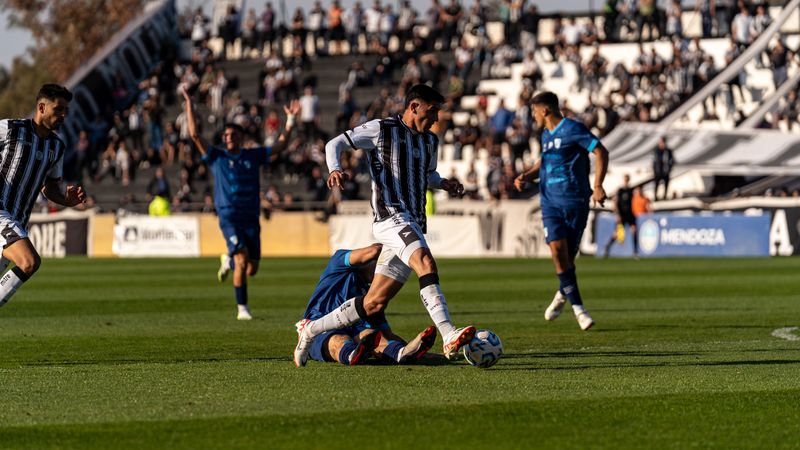
Compactness has been solved. Genuinely. Go and watch a mid-table side in any decent league and the distance from their deepest defender to their highest forward, when the opposition has the ball in a settled position, will be somewhere around thirty-five metres. Everyone does this. It is taught at every level and it has been for twenty years, and describing a team as compact in 2026 conveys roughly as much information as describing them as having a goalkeeper.
What differs, wildly, is where that thirty-five metres sits on the pitch.
A block whose defensive line holds around the halfway line is doing something completely different from one that holds around the edge of its own box, even though both are equally compact and both will show up in the same graphic. The high one is choosing to defend space behind and betting on its goalkeeper as a sweeper. The low one is choosing to defend crosses and second balls in its own area and betting that it can survive a siege. Those are opposite bets requiring opposite personnel, and the shape of the block tells you nothing about which is being made.
So when a coach is criticised for sitting deep, the criticism is usually aimed at the wrong thing. Deep is fine. Deep and passive is the problem, and the tell is not the height of the line. It is what happens when the ball goes wide.
A good low block still presses, it just presses conditionally. Ball goes to the opposition full-back near the touchline, and the near-side winger sprints out to him while the whole unit shuffles across, because the touchline is doing half the defending for you. Compactness in that moment is horizontal, not vertical, and a well-drilled side will have four players inside a fifteen-metre square on that side of the pitch while the far-side full-back tucks in to become a third centre-half.
The bad version does the shuffling but never sends anybody out. The opposition full-back gets six seconds on the ball, unchallenged, and picks a cross or a switch at his leisure. The block looks identical on the tactics board. It concedes twice as much.
That is the distinction that matters and it is invisible in the stats we are given. Passes allowed per defensive action does not catch it. Average defensive line height does not catch it. Time granted to the man in possession in wide areas would catch it beautifully, and I have no idea why nobody publishes it.
ADVERTISEMENT
🧠 Quick Trivia
How many points is a touchdown worth in American football before the extra point?
Related Articles